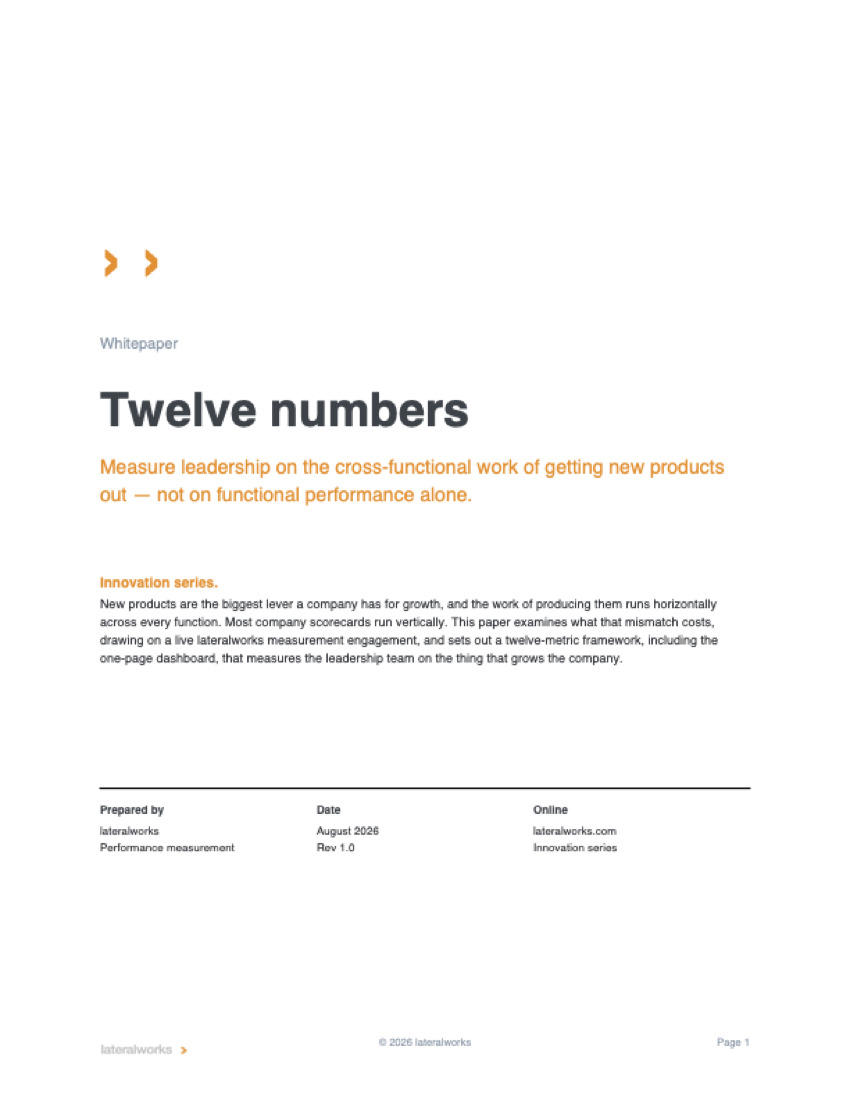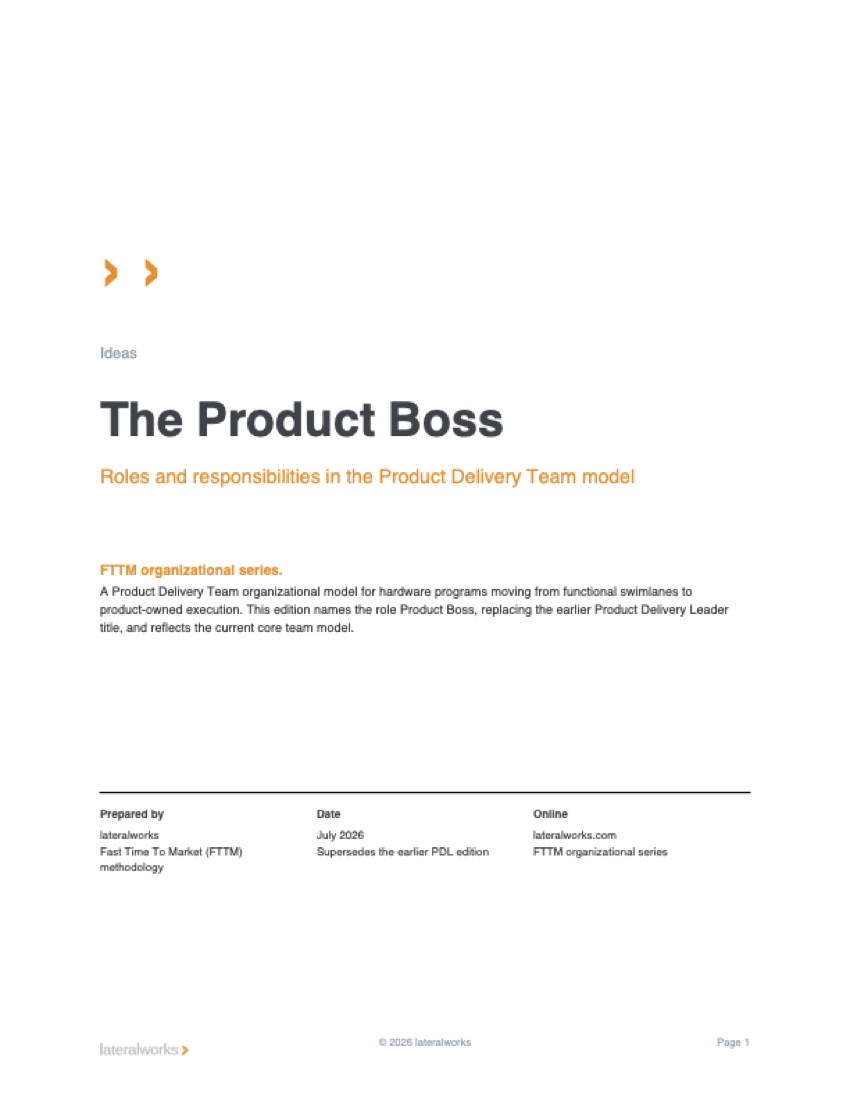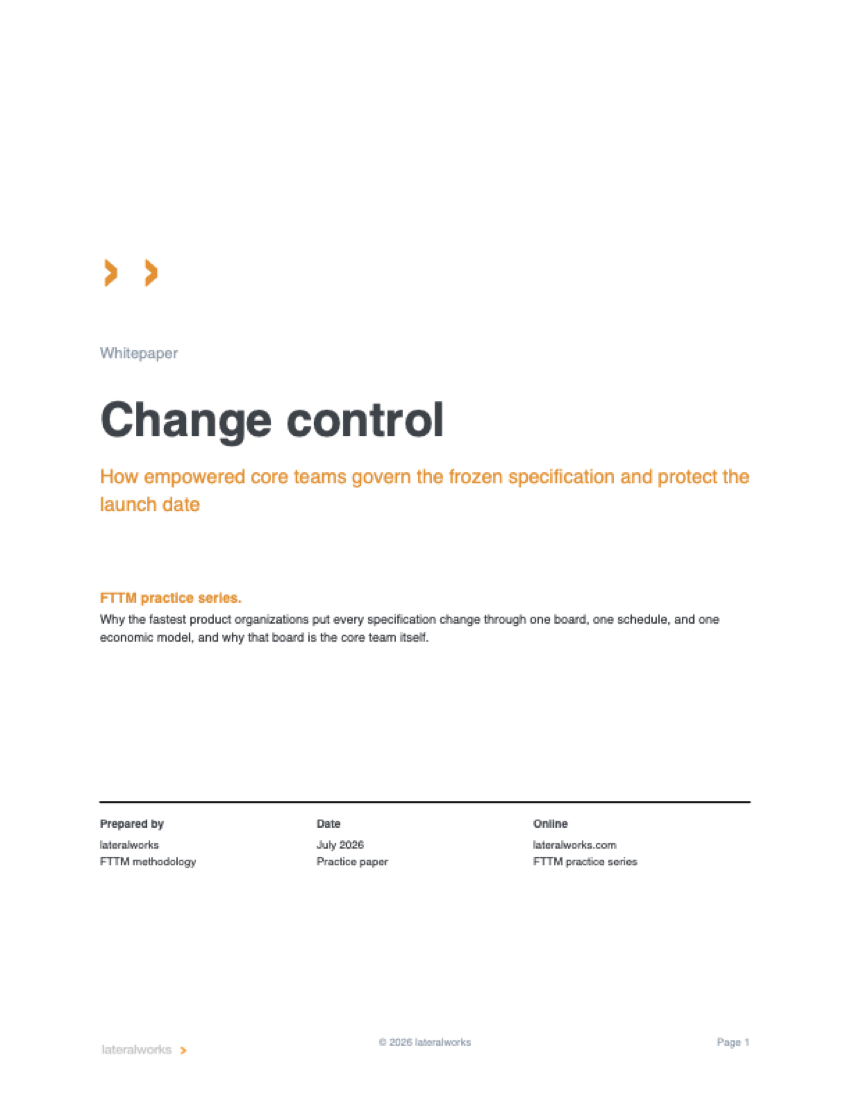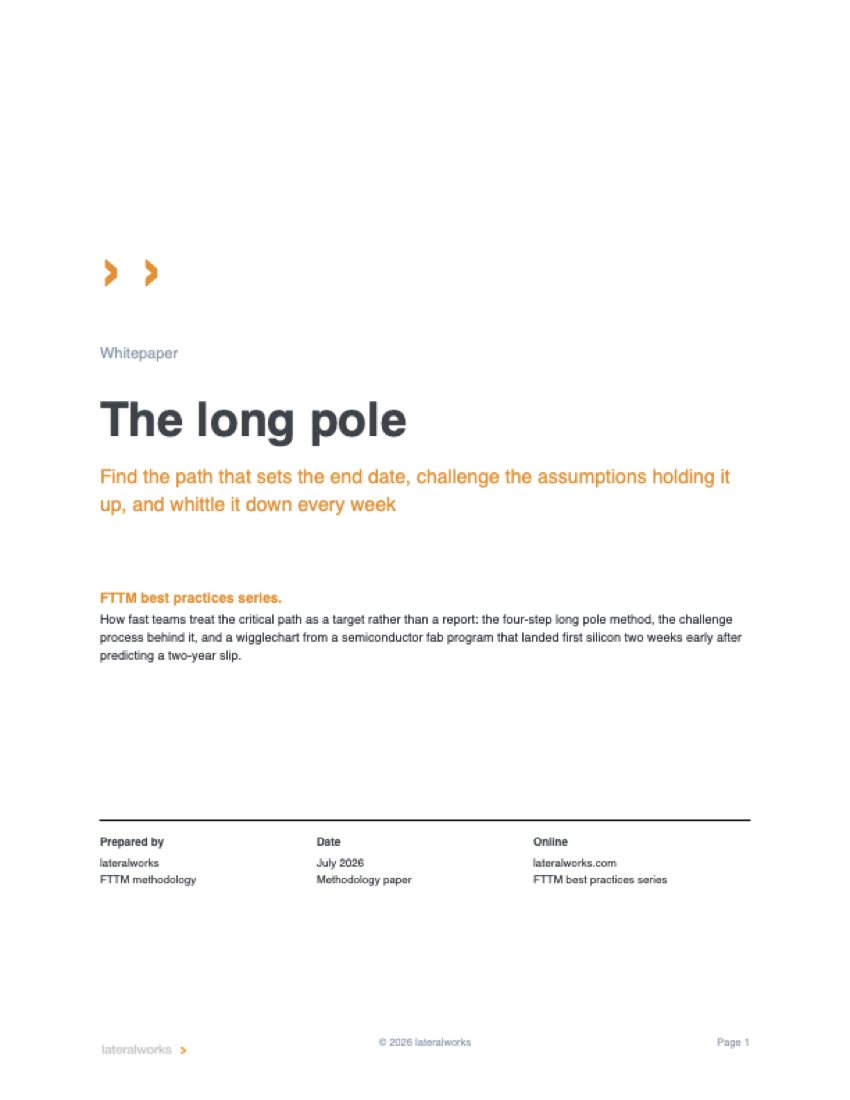
9 papers. 36 years of practice.

Research findings, methodology papers, and field-tested frameworks from the lateralworks team. New papers added regularly — check back.

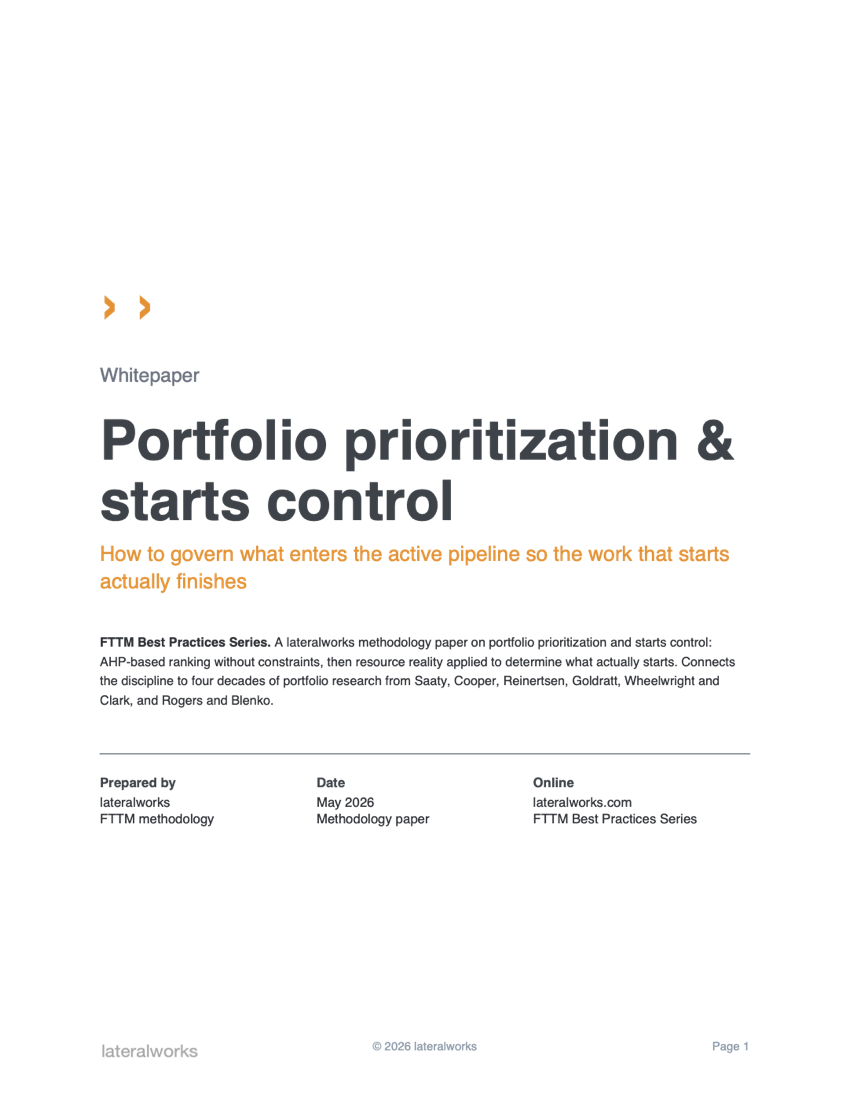
Cover of Portfolio prioritization & starts control
Portfolio·Synthesis paper

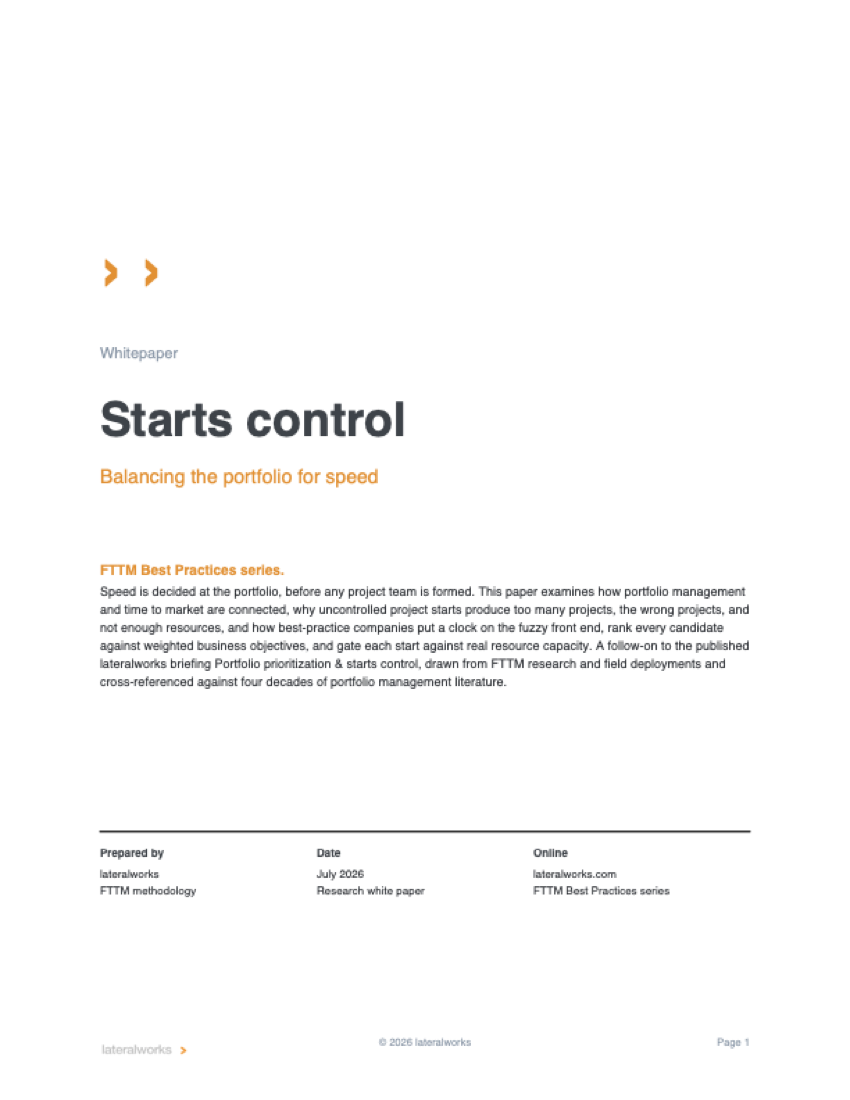
Portfolio prioritization & starts control

How to govern what enters the active pipeline so the work that starts actually finishes

Core thesis. Most product organizations start more projects than they can finish. The cure is not better execution. It is a portfolio discipline that ranks every candidate against weighted strategic and economic criteria, then gates entry to the active pipeline against real resource capacity. Rank without constraints first. Apply constraints second. One person owns the call. Starting fewer projects is how more projects finish on time.

May 10, 2026·43 pages
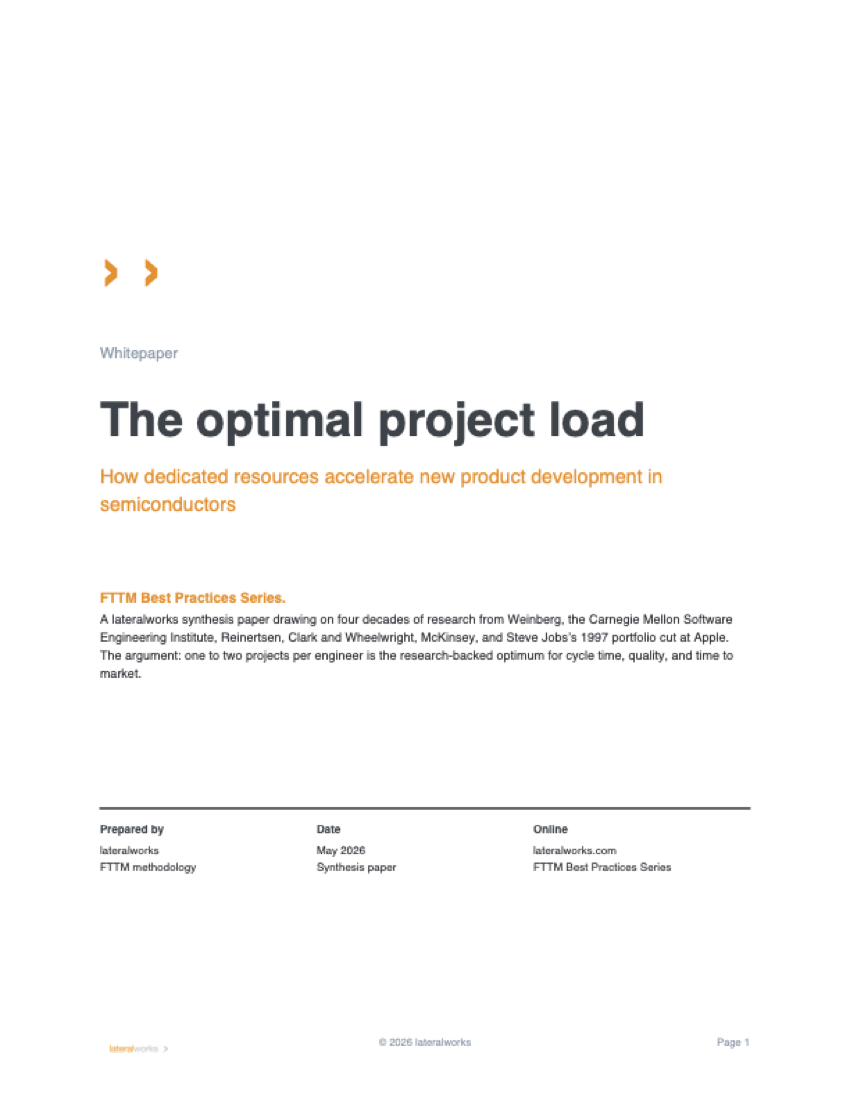
Cover of The optimal project load
Portfolio·Synthesis paper

The optimal project load

How dedicated resources accelerate new product development

Core thesis. One to two projects per engineer is the maximum sustainable load for complex new product development; past two, context switching consumes 40 to 75 percent of working time, queue delays compound at every milestone gate, and calendars slip by months — the structural fix is dedicated cross-functional product teams governed by an explicit portfolio and clear decision rights.

May 9, 2026·27 pages
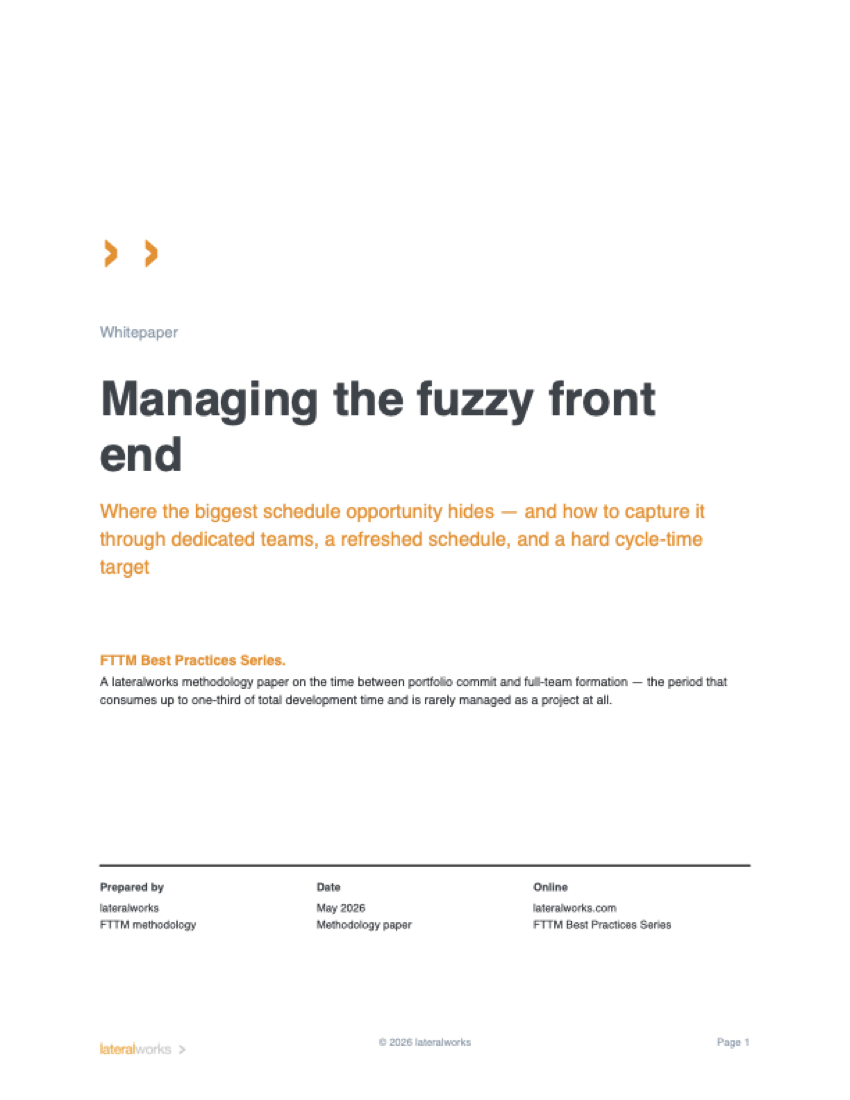
Cover of Managing the fuzzy front end
Portfolio·Synthesis paper

Managing the fuzzy front end

Where the biggest schedule opportunity hides — and how to capture it through dedicated teams, a refreshed schedule, and a hard cycle-time target

Core thesis. The fuzzy front end is the largest, cheapest, and least-managed source of schedule slip in technology product development. Treat it as a real project — with a dedicated cross-functional team, a weekly-refreshed schedule, and a hard cycle-time target — and months come out of the development calendar without compressing the engineering work that follows.

May 9, 2026·32 pages
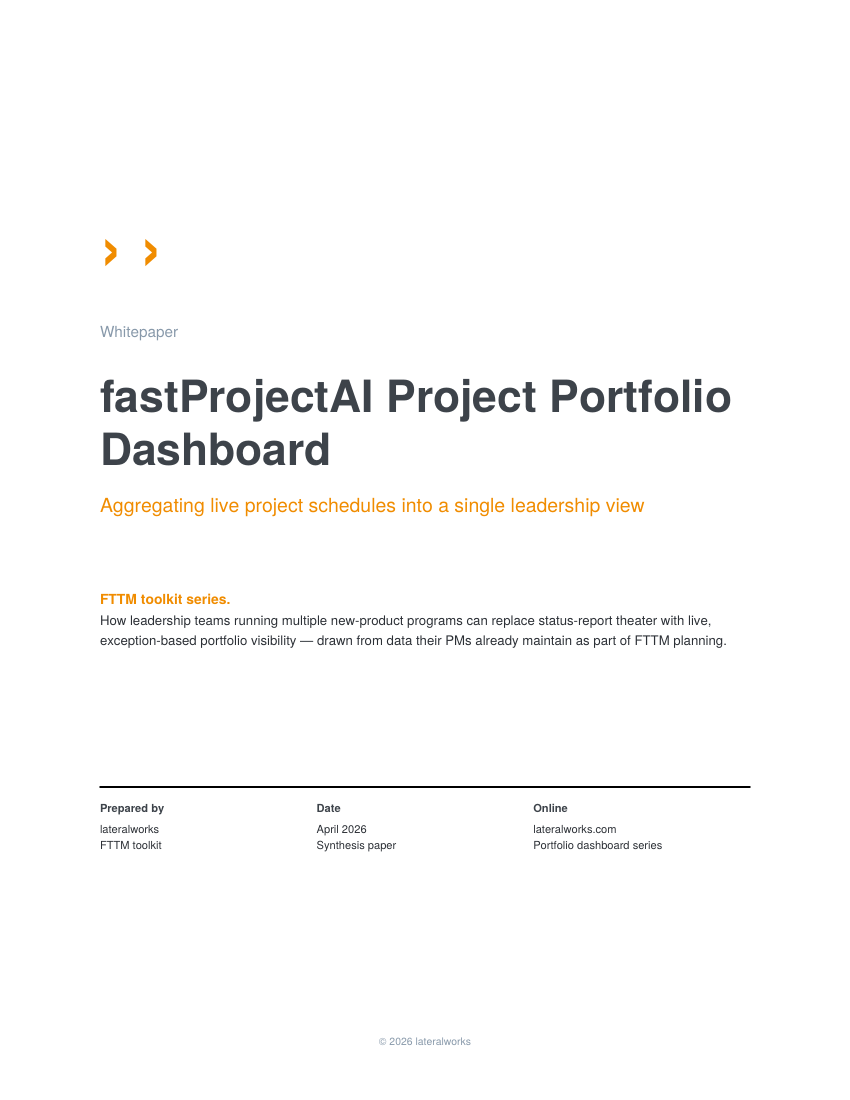
Cover of fastProjectAI Project Portfolio Dashboard
FTTM Toolkit·Synthesis paper

fastProjectAI Project Portfolio Dashboard

Aggregating live project schedules into a single leadership view

Core thesis. Most leadership teams running multiple programs cannot see their portfolio in time to act. fastProjectAI fixes this by aggregating live wigglechart data the PMs already maintain — surfacing the small number of projects that need attention this week, not the long tail that does not.

May 1, 2026·29 pages
Cover of FTTM Process Maturity
FTTM Methodology·Methodology paper

FTTM Process Maturity

A framework for measuring and improving team performance

Core thesis. A team’s schedule maturity is observable, measurable, and migratable. Teams move through four levels — from ML0 (no schedule) to ML3 (active acceleration) — by changing specific behaviors in the weekly refresh. Knowing where a team sits on this curve is the prerequisite to changing it.

April 29, 2026·23 pages
Cover of Host best practices
FTTM Methodology·Revised edition

Host best practices

How executives create the conditions for fast product development

Core thesis. Teams deliver products; the host creates the conditions under which they deliver fast. Fix the host and speed becomes the default. Leave the host alone and team-level improvement fades within a year.

April 27, 2026·48 pages
Cover of Team best practices
FTTM Methodology·Companion edition

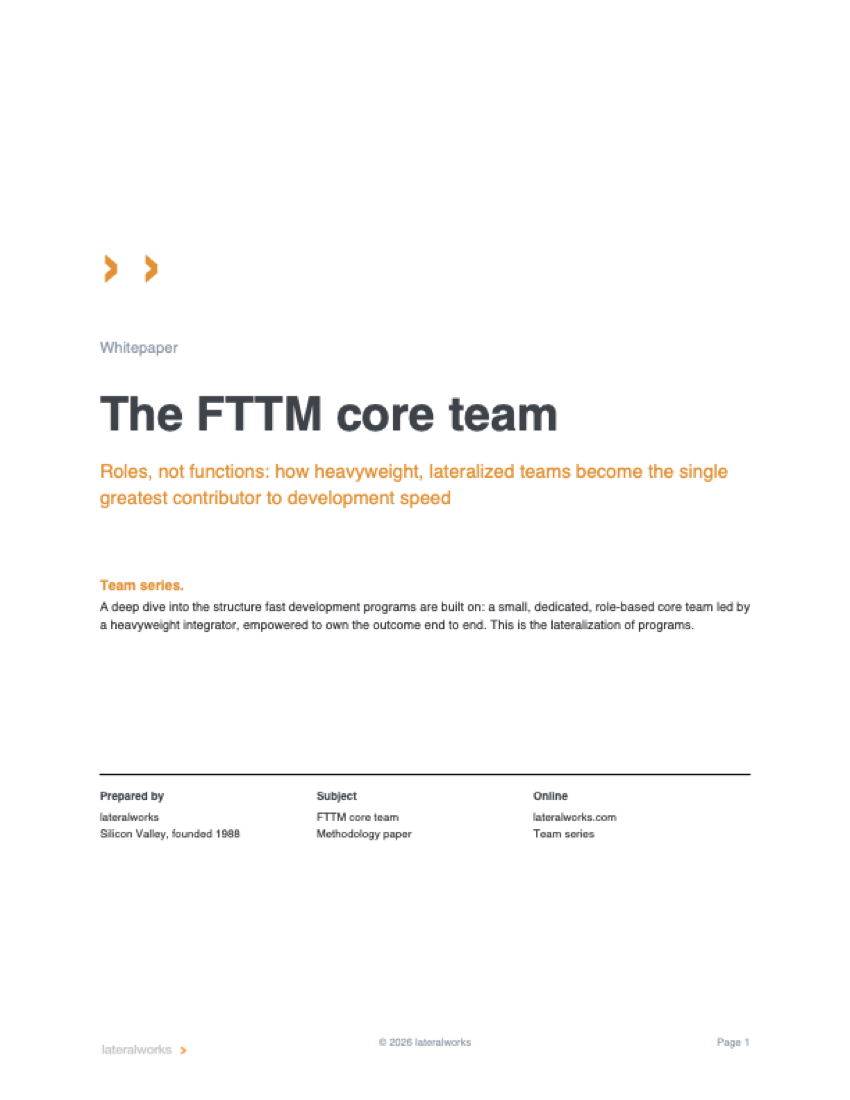
Team best practices

How fast teams get the right product to market at the right time

Core thesis. A fast team organizes itself around the customer (right-product), assembles the smallest competent group of role-owners (right-team), and uses its schedule as the primary tool for driving decisions and exposing gaps (right-time). Inside a provisioning host, these 15 practices cut time-to-market by 30 to 50 percent.

April 27, 2026·31 pages
Cover of Managing up, managing down, and the innovation paradox
Innovation·Synthesis paper

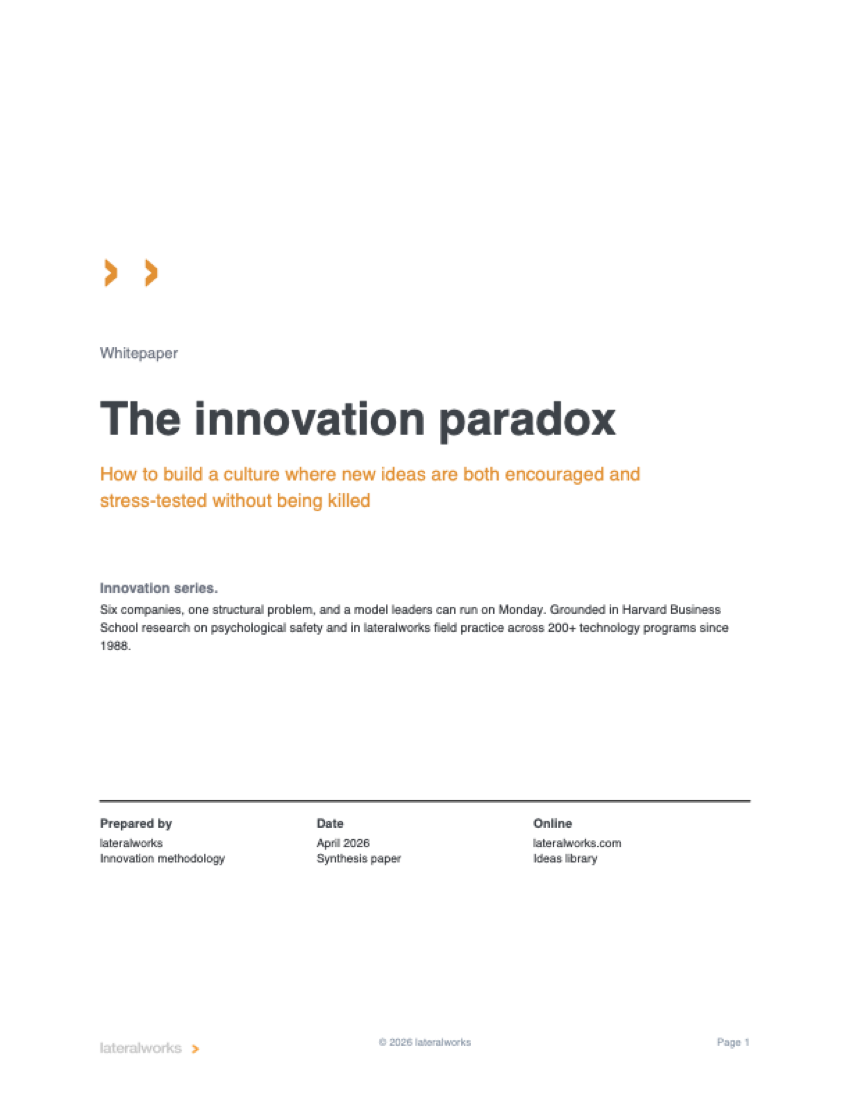
Managing up, managing down, and the innovation paradox

Why senior-manager failure modes kill the innovation their organizations depend on

Core thesis. Innovation needs encouragement before scrutiny, but most organizations evaluate too early and kill fragile ideas. Senior managers either over-invest in managing up (optimizing the upward narrative) or over-invest in managing down (deep in operational weeds). Both break the protection-from-above the innovation environment depends on.

April 26, 2026·22 pages
Cover of FTTM Product Development Best Practices
FTTM Methodology·Methodology paper

FTTM Product Development Best Practices

Three decades of fast-team research, 2018 revision

Core thesis. FTTM outcomes are a function of two inputs — the behavior of the team and the environment within which the team operates. Best practices observed across hundreds of programs are codified into a Mindset / Host / Team framework that delivers the right product at the right time.

July 18, 2018·101 pages

9 papers. More papers added regularly.